
Date: March 19th, 2026
The second solo exhibition by gallery artist Lydiane Lutz, titled Sehnsucht (Longing), has opened in our light-filled spaces in Stuttgart. Lydiane presents a entirely new series of works on Plexiglas, which add a new dimension to the open concept and airy imagery the artist has created to date.
I speak with Lydiane about her inspirations, what drives her, the themes her work deals with, and their underlying motivations.
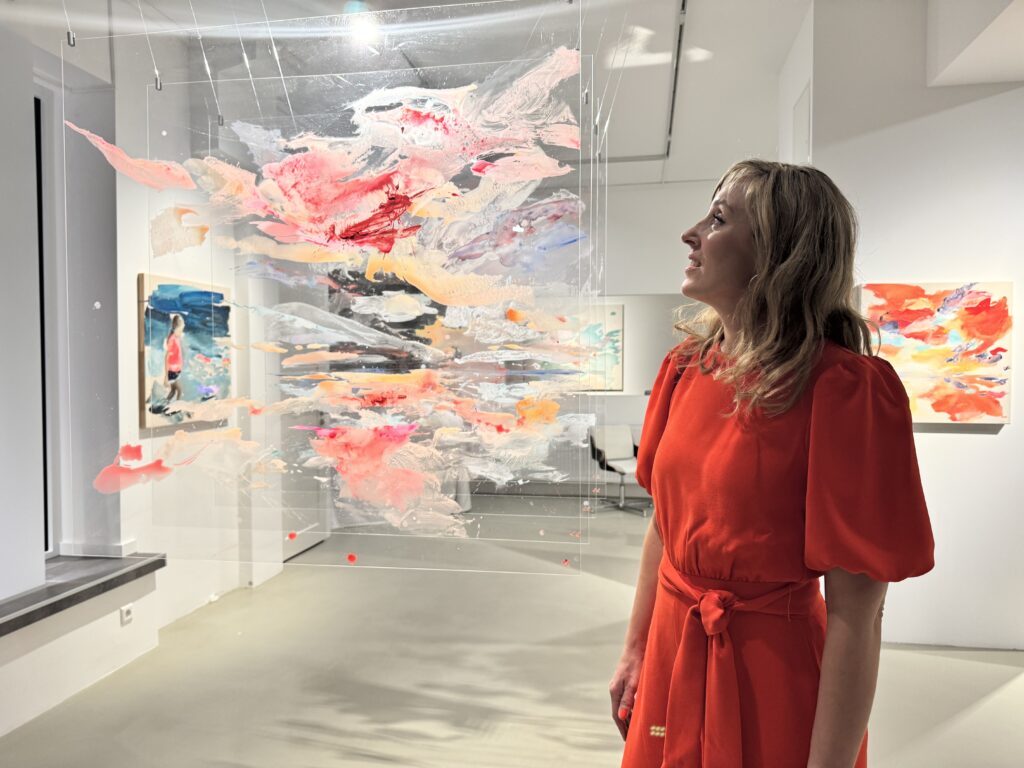
Ilona Keilich: “The highest state a person can attain is a sense of wonder,” said Johann Wolfgang von Goethe. You said that your paintings are meant to awaken a longing to immerse oneself in the reflected sky. What does longing mean to you?
Lydiane Lutz: For me, longing operates on two levels. On the one hand, there is a wholly ordinary form of longing. Almost all of us, for example, know the feeling of longing for spring—for light, warmth, and new beginnings. In my painting, I go a step deeper. Through the artistic process, I explore what I perceive as humanity’s deeper longing. As I paint, an interplay emerges between seeing, feeling, and what happens on the canvas. New insights arise in this process. These insights then become more deeply rooted within me. Art can remind us of something we have long carried within us. This connection and this remembrance move me deeply.
How can your work be interpreted in the current art context? What is society longing for today? Why is your art so significant right now?
I believe that many people today long for stability and security. And for calm – for a place where they can find inner peace. In an age when we are constantly exposed to information, media, and external influences, perhaps the longing for genuine connection is also growing: for encounters with other people, for community and closeness. The longing for authenticity seems very strong to me today—for something tangible and genuine—especially in contrast to an increasingly digital world.
My artistic work is also relevant because it can reflect such a place—a space of tranquility where one can find inner peace while viewing it. The figures in my paintings are often found in other settings: places of tranquility, comfort, and connection. These works explore inner themes such as detachment, relationships, encounters, and trust. Color also plays a vital role—it carries this atmosphere and opens a space for feeling.
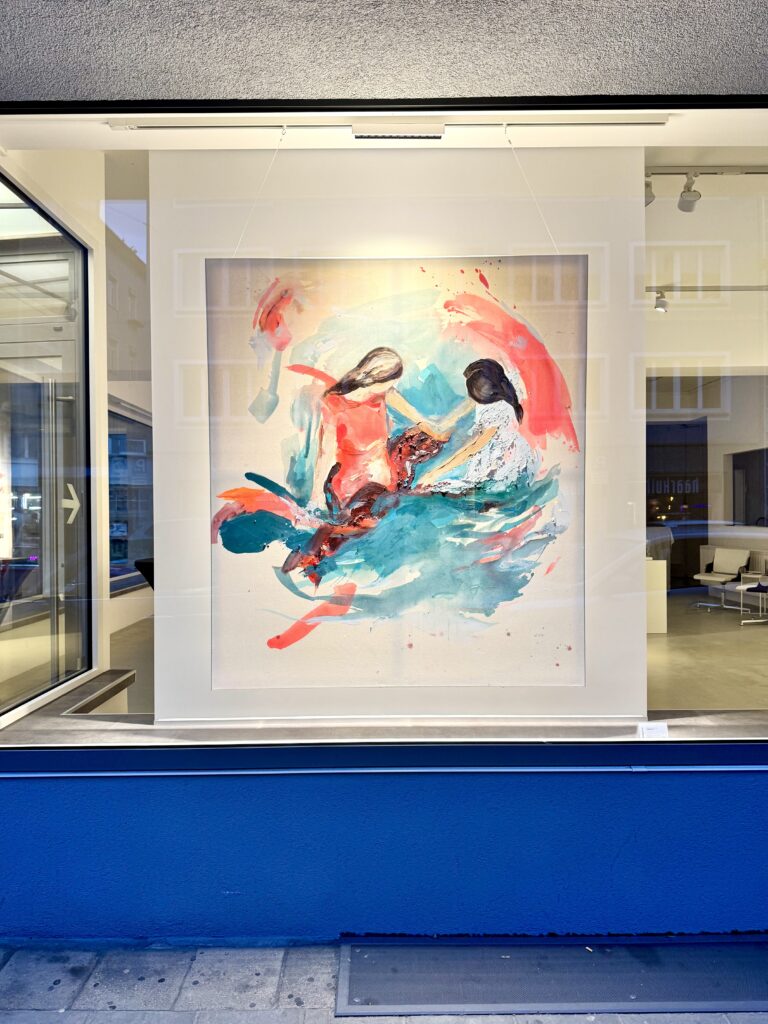
In art history, women were often portrayed as muses, as an ideal for men. In your work, women are simply present, without assuming a specific role or having to assert themselves. They trust in what is to come. They face the world and life with courage and self-confidence. What does it mean to you to portray women this way in your art?
I paint women as I perceive them—and as I sense the essence of womanhood. I see strength, dignity, courage, and great emotional depth inherent in us as women. For me, these are qualities that lie deep within us, even if they manifest differently in each individual. I am particularly interested in moments of being. I see my paintings as reminders that we are allowed to have moments in which we simply are. Moments in which we can let go.
For me, being able to trust is something very precious. In everyday life, which is often marked by busyness, this feeling easily fades into the background—at least that’s what I experience time and again in my own life. That’s why I need reminders of it. In my art, I rediscover these memories.
I’ve been asking myself: What happens when we have the courage to follow what truly lies within us—our strengths and our own calling? I explore this idea in my painting. And I’m curious to see what emerges from it.
A new phase in an artist’s career often signals an inner transformation in the artist. Does this statement apply to your own development, or is it actually the other way around—have your paintings changed you?
For me, art is always a journey. The artistic process is a constant exploration. I am a very curious person and take great pleasure in exploring things. That’s why it’s hard for me to say which comes first. I believe that both influence each other—it’s a kind of interaction. Every period brings about change. We are always in the midst of a process: our surroundings, life, art itself—all of these influence us and constantly reshape us.
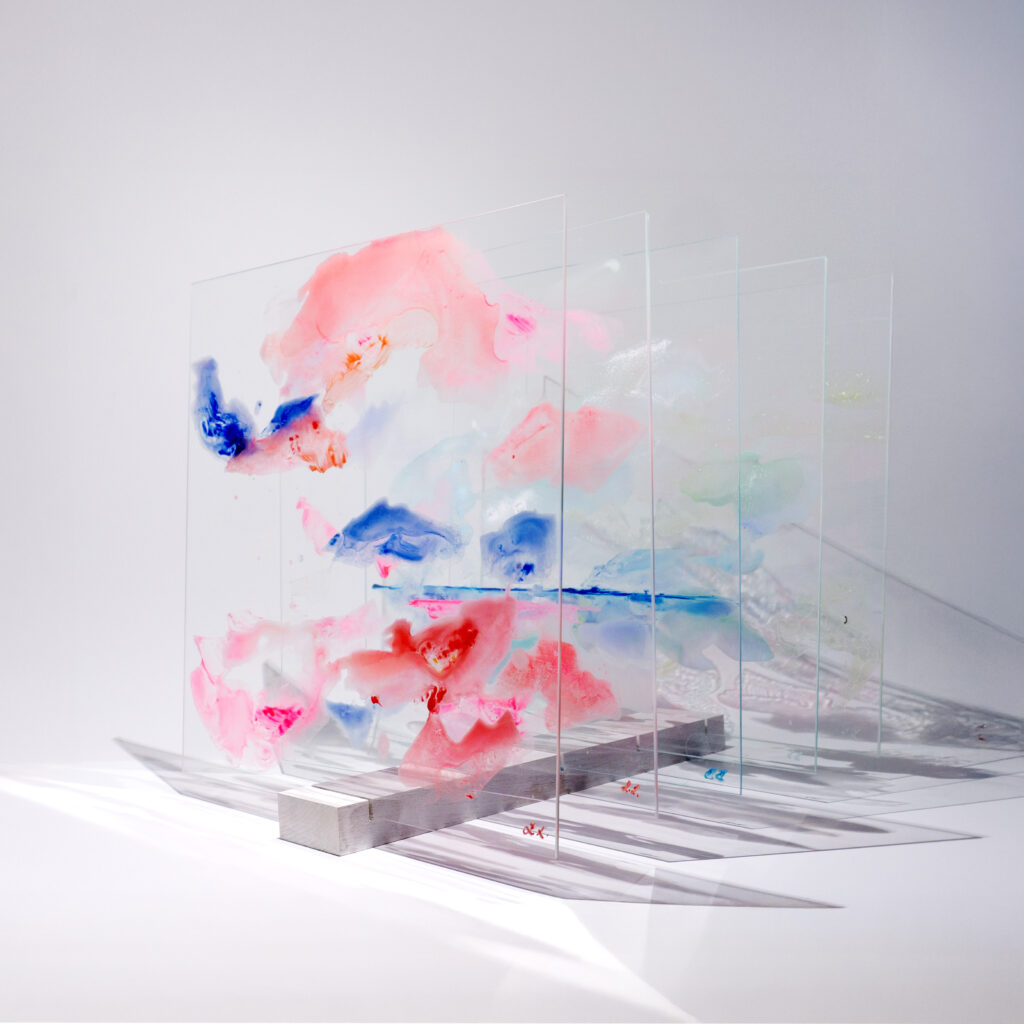
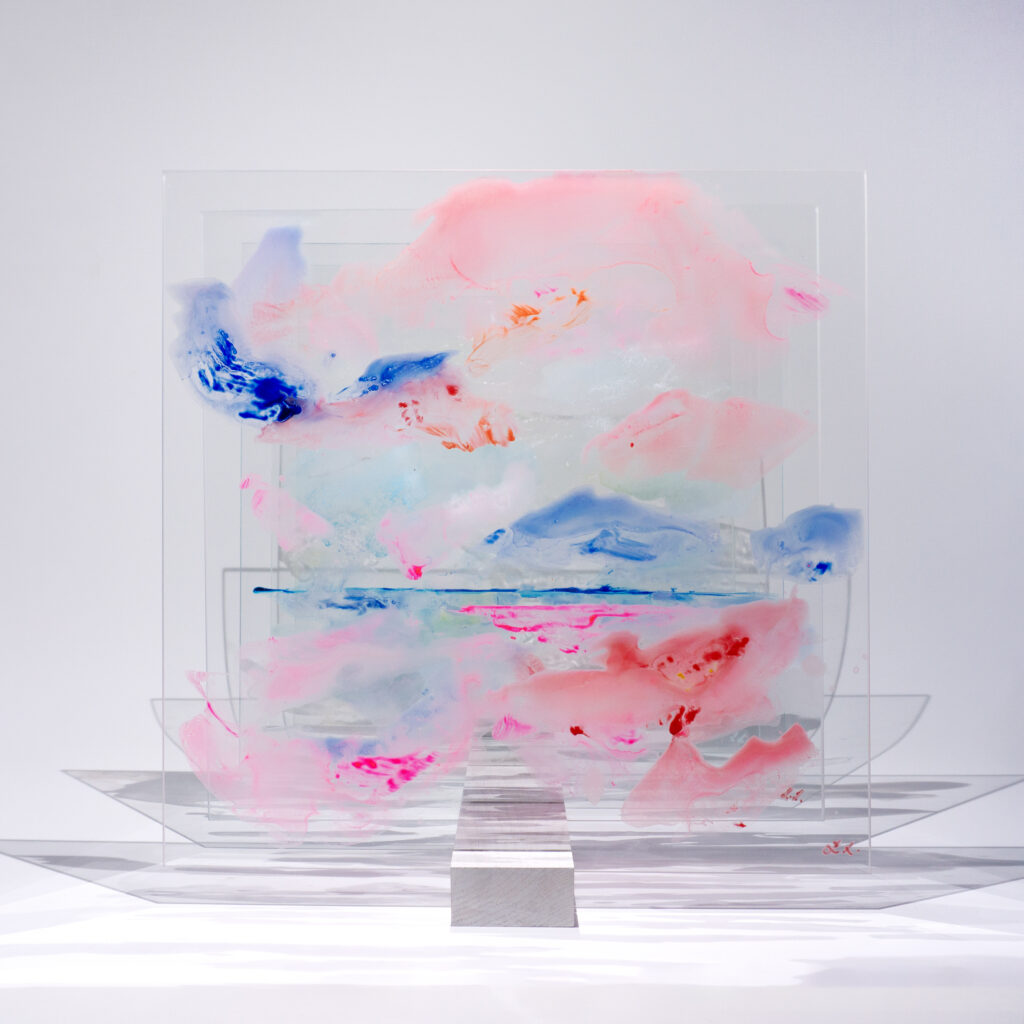
In your art, chance or coincidence and the deliberate use of pigments and water play an important role. How important is it for you, both as an artist and in your personal life, to allow for uncertainty and to accept it? Where do you find the balance between letting go and losing control?
The term “coincidence” sometimes feels a bit too vague to me. I tend to experience it more as things coming into my life—and then I can discover what lies within them. This also applies to the artistic process.
When I paint, for example, something happens with the colors on the canvas. Then I pay very close attention: What is revealing itself here? What is this moment telling me? I respond to that. I integrate it, change it, paint over something, or deliberately leave it as is if it feels right.
I feel much the same way about life. We get to discover again and again what we can create. It is precisely this process that interests me. It is often challenging; sometimes it pushes us to our limits or even beyond them. That can also be painful.
Gerhard Richter has frequently worked with glass in his practice. He was often interested in the way glass—even though it is transparent—always reflects its surroundings. It is never just itself. Why did you feel that now was the right time to replace the canvas with glass?
I always find it fascinating when things come together in new ways after a long time. I was already working with glass about twenty years ago, while I was studying at the Munich Academy of Fine Arts. And now this material has found its way back to me in a new way.
I wanted to explore the themes that have been on my mind a lot in recent years—especially water—using a different medium. Acrylic glass opens up a new spatial dimension in this regard. It brings the works more strongly into the space. Even on my canvases, I have often deliberately left space—an open area that allows for a kind of dialogue with the viewer.
My intention is not so much to replace the canvas, but rather to transfer the themes that occupy me to different materials and levels.
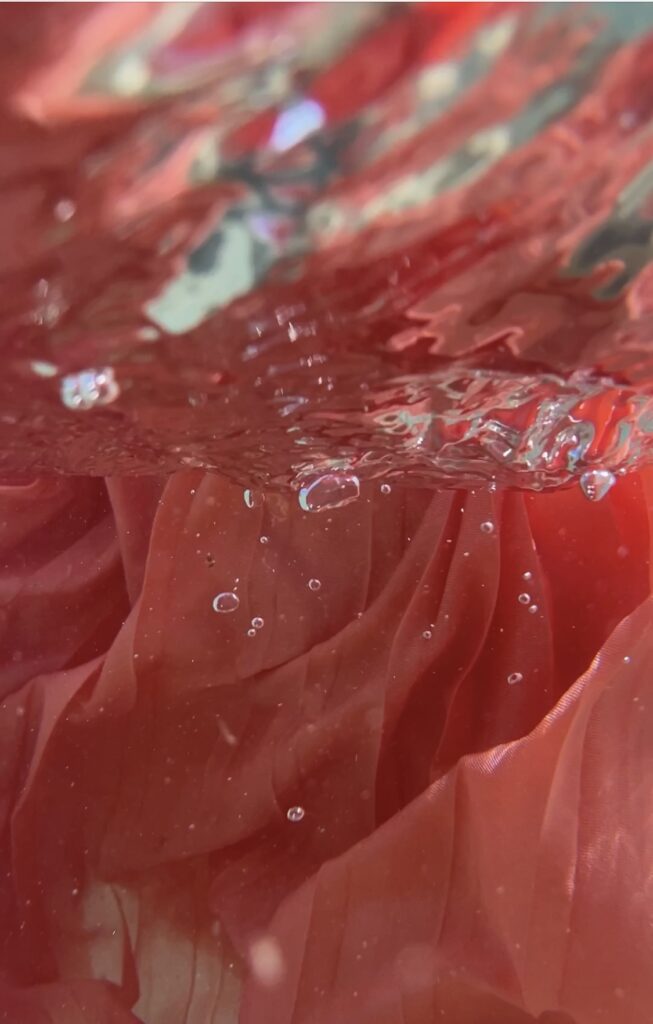
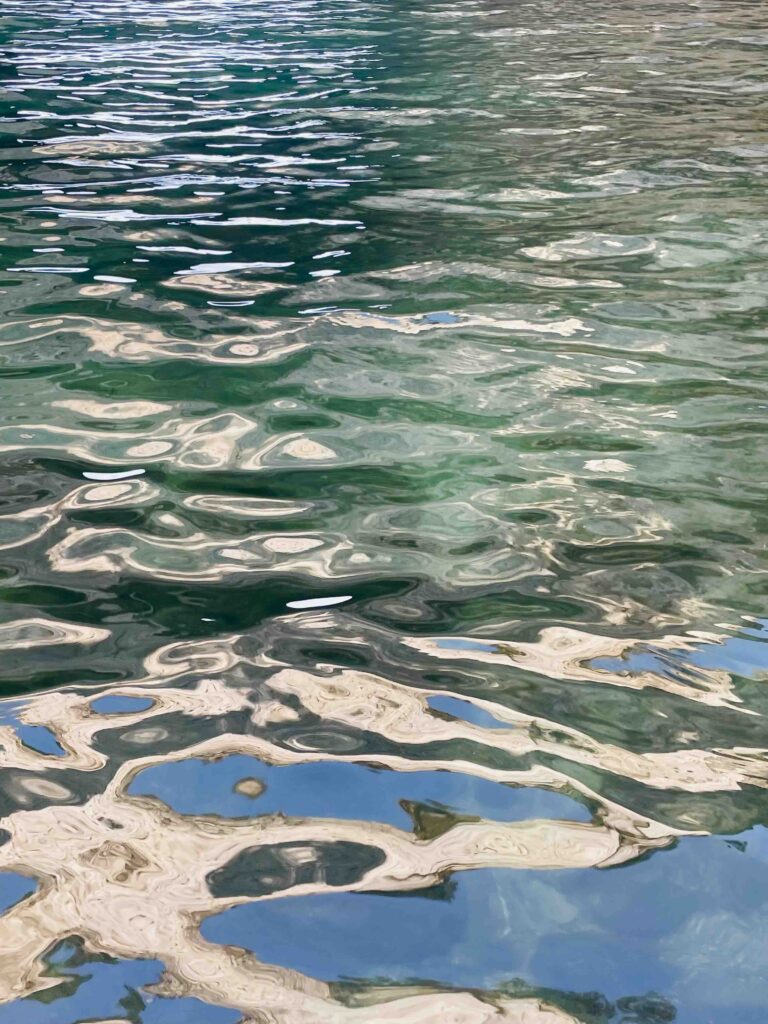
Does being open and transparent also mean being vulnerable?
I do believe that opening up can make you more vulnerable. When you share your thoughts and feelings, you make yourself more exposed in a way. At the same time, however, I also see this as a great opportunity: perhaps this openness encourages us to treat one another with more responsibility and care. Especially in our relationships with others, this could be an important quality.
_____________________
Lydiane Lutz’s exhibition Sehnsucht is on view at the EXOgallery through April 11, 2026.